What needed solving
At infeed, primary packs must be verified for correct slug count and correct variant before cartoning; at outfeed, sealed cartons must be free of glue gaps, flap gaps, and flap misalignment.
Manual and sampling-based checks could not hold 100% count/variant accuracy or 98% carton-defect accuracy across multi-shift running and nine SKU changeovers.
How Qualitas solved it
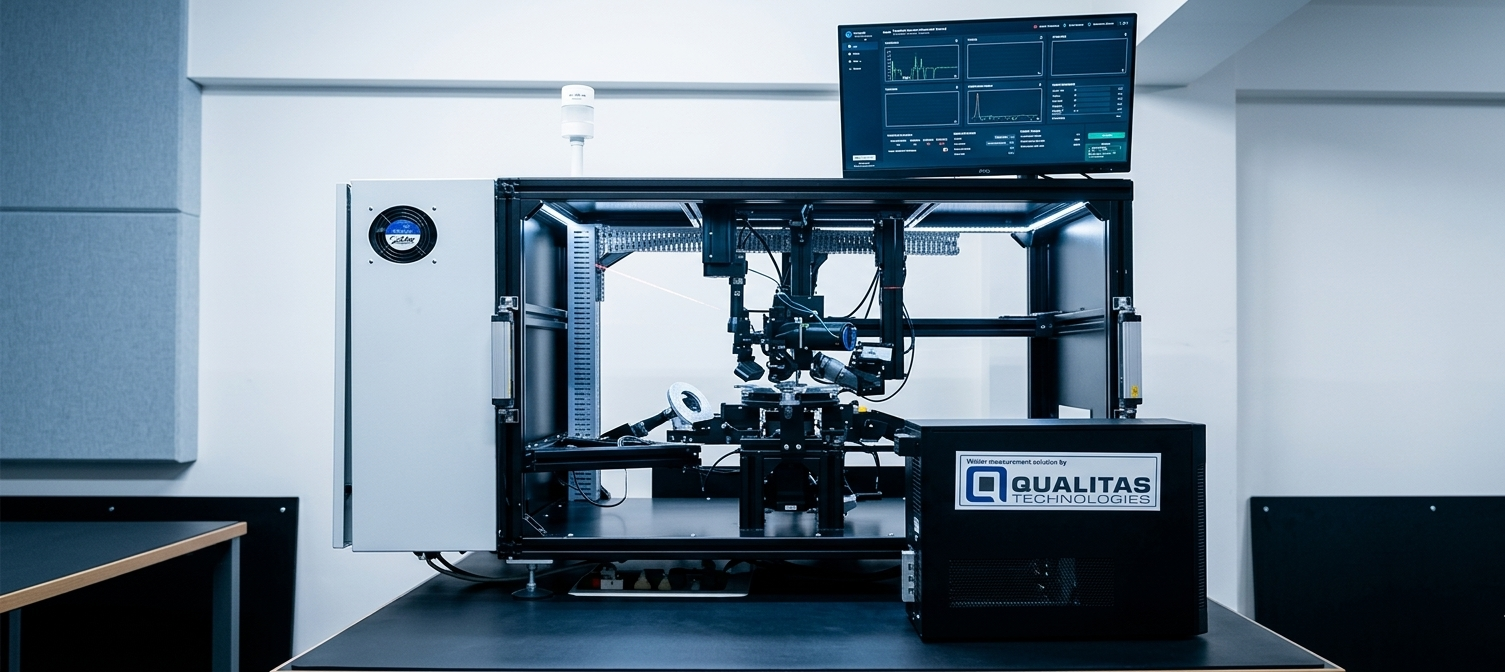
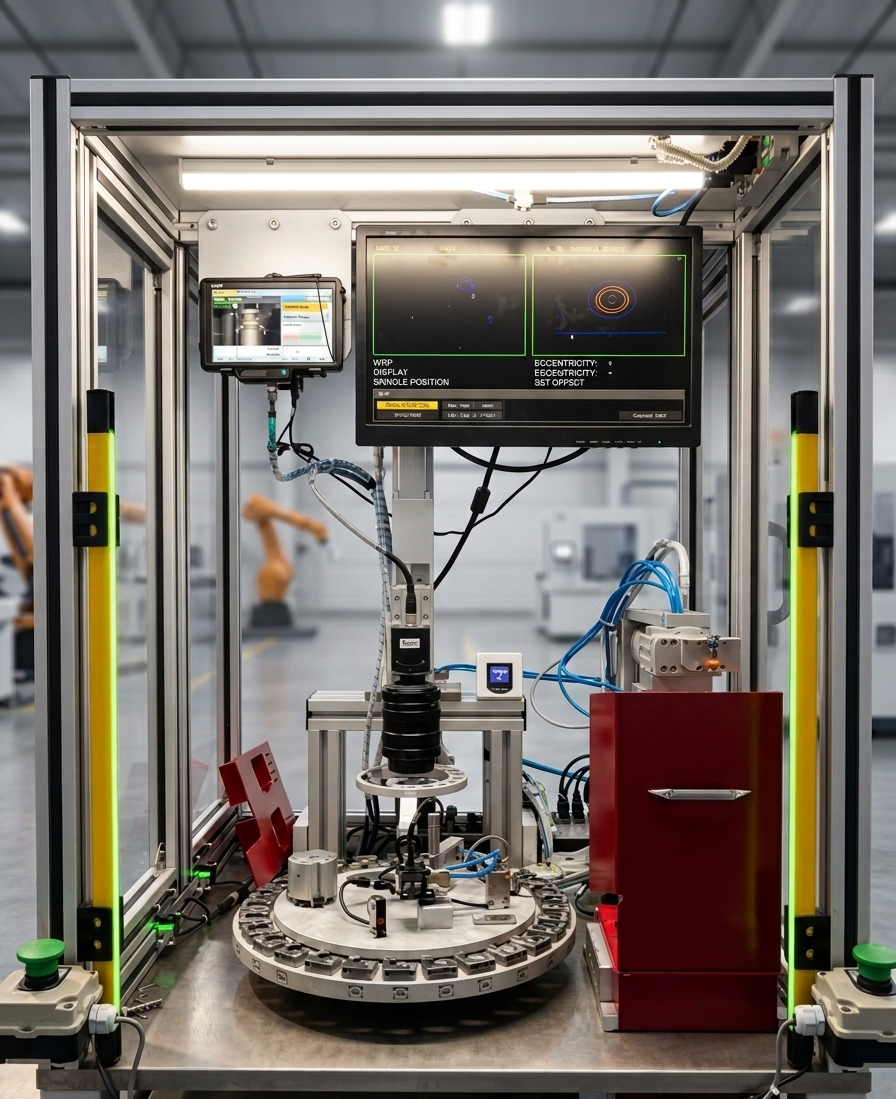
Two EagleEye vision stations on the cartoning line — primary pack infeed and secondary carton outfeed — synchronised with the line PLC so flagged rejects use the customer’s existing rejection process.
Infeed verifies slug count and variant across nine SKUs; outfeed measures glue/flap gaps and misalignment against fixed tolerances and reads date/batch codes via OCR.
1. The Challenge: Zero-Defect Expectations on a High-Speed Line
The customer’s cracker packaging line runs on automated cartoning equipment across nine active SKU variants — spanning large and small pack formats, regional export variants, and multiple sandwich-cracker formats. At infeed, primary packs must be verified for correct slug count and correct variant before entering the carton; at outfeed, the sealed secondary carton must be free of glue gaps, flap gaps, and flap misalignment before it reaches distribution.
Working with their systems integration partner, the customer set a strict bar: 100% accuracy on count and variant mismatch at infeed, since a single misfilled or wrong-variant pack reaching a consumer is a brand and food-safety issue — and a 98% accuracy target on outfeed carton defects, where sub-millimetre glue and flap tolerances are difficult for human inspectors to judge consistently at line speed.
| Requirement | Why it mattered | Target |
|---|---|---|
| Count mismatch (infeed) | Under-filled packs are a consumer complaint and compliance risk | 100% |
| Variant mismatch (infeed) | Wrong-SKU packs create recall and mislabeling exposure | 100% |
| Glue gap (outfeed) | Seal integrity affects shelf life and transit damage | >2.5mm reject, 98% |
| Flap gap (outfeed) | Visible flap gaps affect shelf presentation and integrity | >2.5mm reject, 98% |
| Flap misalignment | Cosmetic and structural carton defect | >1.5mm reject, 98% |
| OCR / batch code | Traceability for date and batch compliance | 100% |
2. Why Manual Inspection Fell Short
Before automation, count and variant checks at infeed relied on operator vigilance and periodic sampling — adequate for gross errors, but not capable of catching every mixed-variant or short-fill event across continuous multi-shift running. At outfeed, glue gap, flap gap, and flap misalignment are visual judgments made against tolerances (2.5mm and 1.5mm) that are difficult to hold consistently by eye, particularly across a 9-SKU changeover schedule.
| Limitation | Impact on the production line |
|---|---|
| Sampling-based checks | Defects between samples pass through undetected |
| Sub-mm visual tolerances | Inconsistent calls on glue/flap gap near threshold |
| Multi-variant changeovers | 9 SKUs increase chance of variant mix-up at infeed |
| Fatigue over long shifts | Detection consistency drops over a shift |
| No structured audit trail | Difficult to prove accuracy for compliance sign-off |
| Manual OCR checks | Date/batch code misreads slip through at speed |
3. The Qualitas Solution
Qualitas Technologies designed and deployed two purpose-built EagleEye vision stations on the cartoning line — one at primary pack infeed, one at secondary carton outfeed — synchronised with the line’s PLC control signals so that a system-flagged reject is handled directly in the customer’s existing rejection process.
Station 1 — Primary Packaging Infeed verifies slug count and product variant for every pack across all nine SKU variants as it enters the carton — empty, under-filled, and cross-variant mixing are all caught before sealing.
Station 2 — Secondary Packaging Outfeed inspects the sealed carton for glue gap, flap gap, and flap misalignment against fixed tolerances (2.5mm / 1.5mm), and reads date and batch codes via OCR for traceability.
| Capability | Station | Detection method |
|---|---|---|
| Slug count verification | Infeed | Rule-based vision |
| Variant identification (9 SKUs) | Infeed | Deep learning classifier |
| Empty / partial pack detection | Infeed | Rule-based vision |
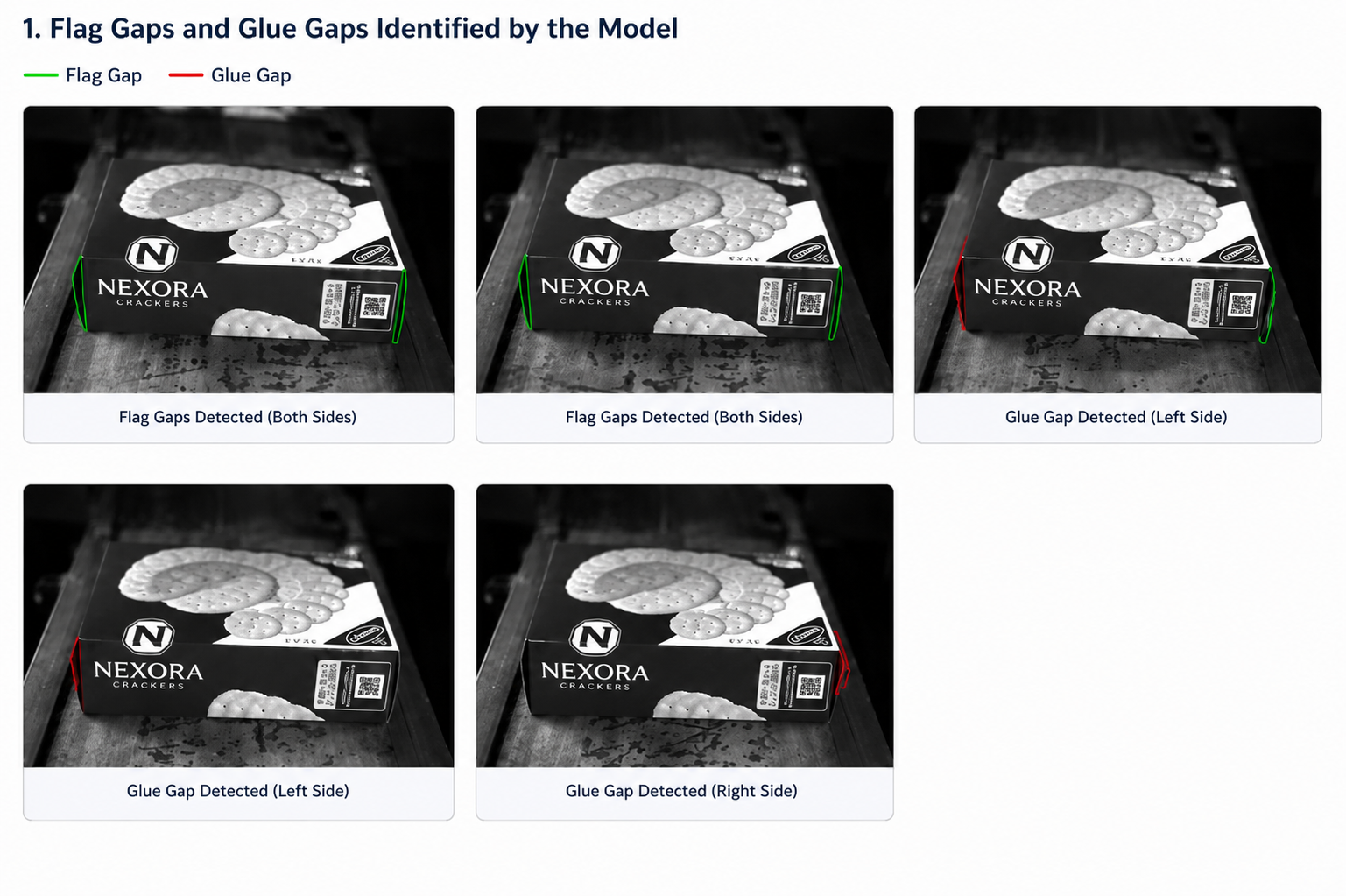
| Glue gap measurement (>2.5mm) | Outfeed | DL + edge measurement |
| Flap gap measurement (>2.5mm) | Outfeed | DL + edge measurement |
| Flap misalignment (>1.5mm) | Outfeed | DL + edge measurement |
| Date / batch code OCR | Outfeed | Trained OCR model |
| Reject signal to line PLC | Both | I/O synchronisation |
4. Results: Independently Validated Performance
Performance was measured through a structured UAT protocol jointly agreed with the customer and their systems integration partner, based on true positive/true negative testing against 100-sample defective and good-product batches, followed by an end-to-end validation run on live production data captured for the highest-volume SKU variant.
| Defect Type | Customer Expectation | Qualitas Commitment | Result |
|---|---|---|---|
| Count Mismatch | 100% | 100% | Met |
| Variant Mismatch | 100% | 100% | Met |
| Glue Gap | 100% | 98.0% | Signed off |
| Flap Gap | 100% | 98.0% | Signed off |
| Flap Misalignment | 100% | 98.0% | Signed off |
| OCR | 100% | 100% | Met |
| Defect Type | Images Tested | Actual Defects | Correct Detections | Accuracy |
|---|---|---|---|---|
| Overall (all defects) | 5,603 | 156 | 5,522 | 98.5% |
| Flap Gap | 5,603 | 6 | 5,600 | 99.9% |
| Glue Gap | 5,603 | 5 | 5 | 100% |
| Flap Misalignment | 11,206 | 146 | 11,143 | 99.4% |
| OCR (date/batch) | 5,603 | 2 | 5,584 | 99.66% |
Average model execution time held at approximately 150ms per box across 5,600+ images — fast enough to run inline on the packaging line without becoming a bottleneck.
5. Implementation & Deployment
The rollout followed a phased approach: baseline dataset capture and model training on all nine variants, followed by a structured UAT phase using 100-sample true-positive/true-negative batches per defect type, and finally an end-to-end production validation run before formal joint sign-off between Qualitas and the customer’s project team.
Barcode reading was scoped out of this phase pending new hardware procurement by the customer, who retained ownership of the physical infeed rejection process — with Qualitas supplying a synchronised reject output signal to the line’s control system rather than handling physical rejection directly.
- Training and validation datasets built per variant across all nine SKUs
- Accuracy validated using a documented misprediction formula: (Total inspections − mispredictions) / Total inspections × 100
- Test plan covered mixed-variant, empty, and under-filled scenarios at infeed; combination defects at outfeed
- Reject output signal synchronised with the line’s control system
- Local HMI displays live pass/fail status per station
- Validation dataset and accuracy logs retained for compliance audit