The challenge
What needed solving
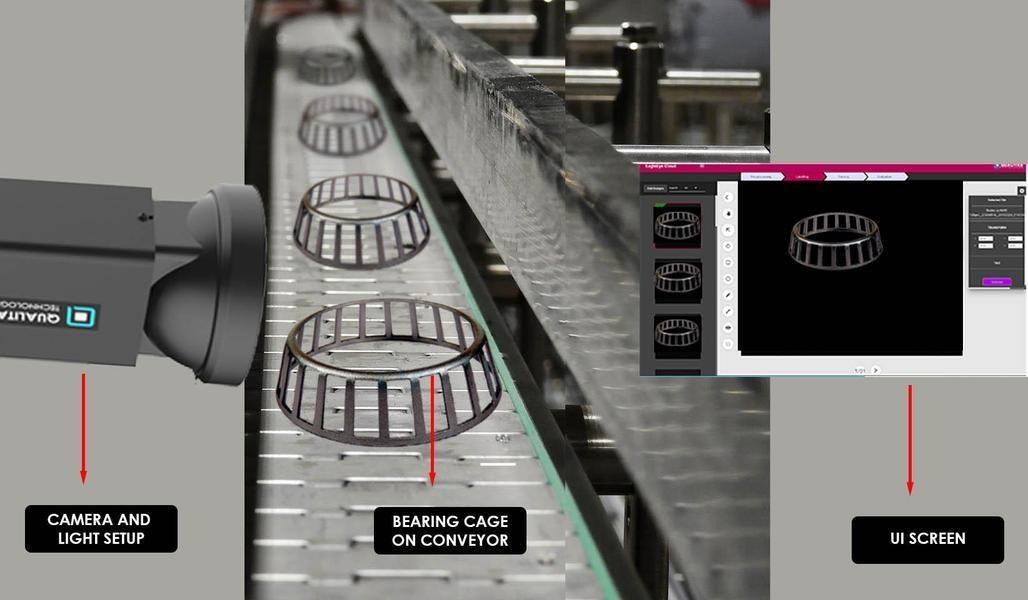
Manual visual inspection was falsely accepting dents, bumps and etching/corrosion on bearing cages. These defects make bearing elements vibrate and impact the inner and outer races, shortening bearing life.
The solution
How Qualitas solved it
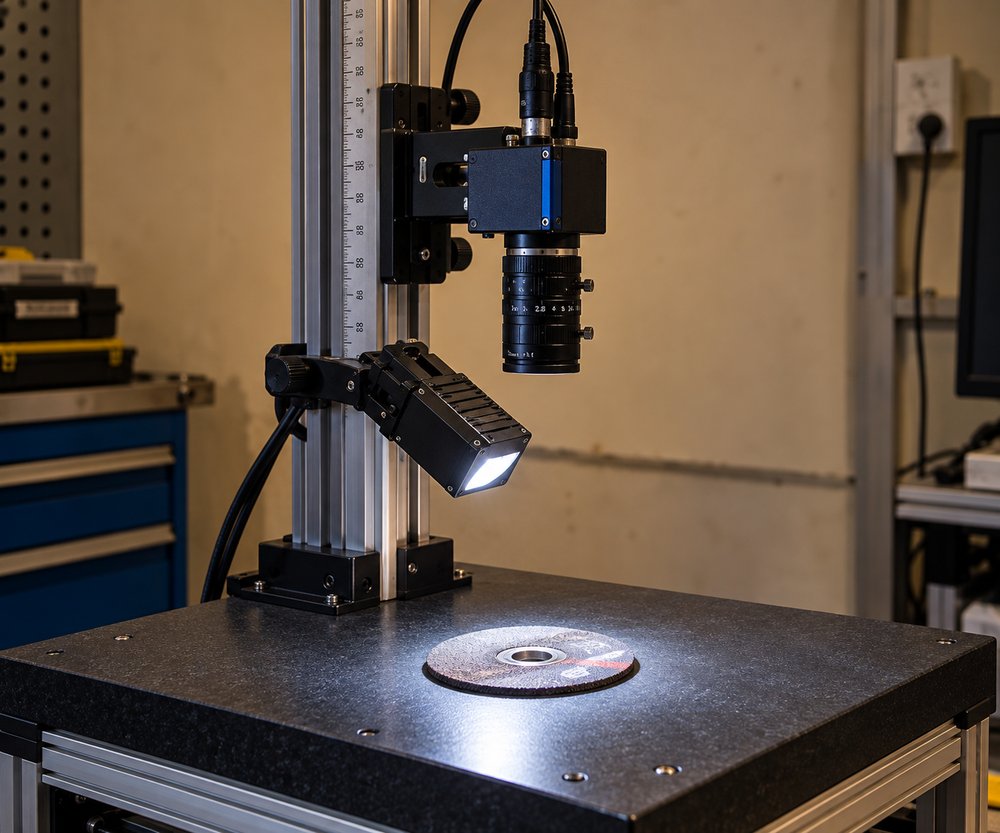
A camera with red-light illumination at the inspection point captures each cage. A deep learning model on the Qualitas EagleEye Platform detects defects in real time and sends results to a PLC.
Proof of concept
The system was validated on production bearing cages of multiple diameters, detecting dents, bumps, etching/corrosion and scratches.
Results
In the proof of concept, the false acceptance rate fell from 30% to 2–3%, and inspection time dropped from 2 minutes to under a second. Human intervention in the inspection loop was eliminated.