
Machine Vision has a history of about half a century, yet human vision has evolved over hundreds of thousands of years. In industrial settings — especially quality control — there is an increasingly greater demand for accuracy with speed. Where does machine vision surpass human inspection, and where does human judgment remain indispensable?
Where Machine Vision Surpasses Human Inspection
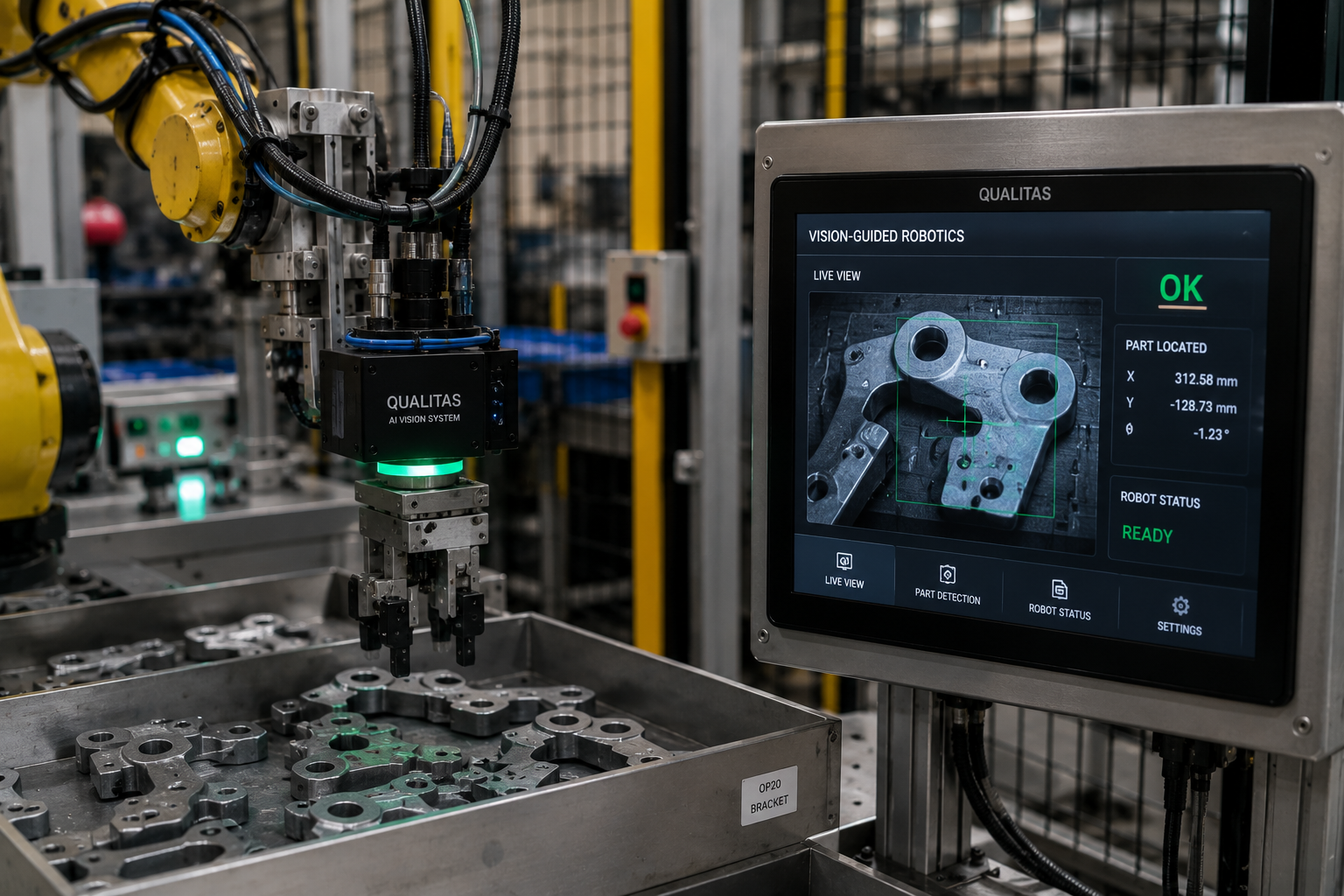
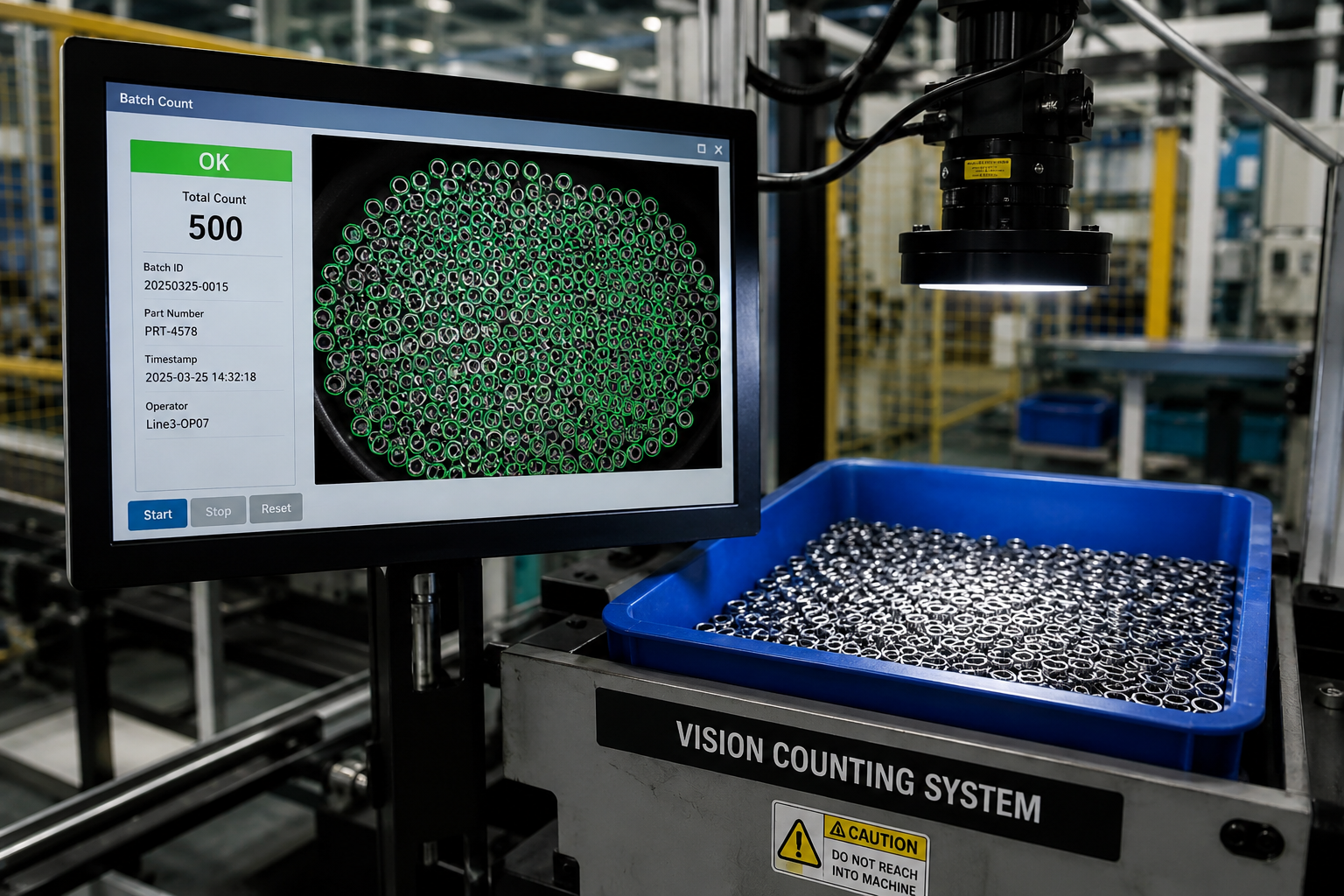
Sorting, counting, and OCR applications where perceptual quality is not the key decider can be achieved round the clock at very high rates. Machine vision OCR/OCV tools achieve >99% accuracy — volumes and monotony entailed during such inspection surpass human capacity.
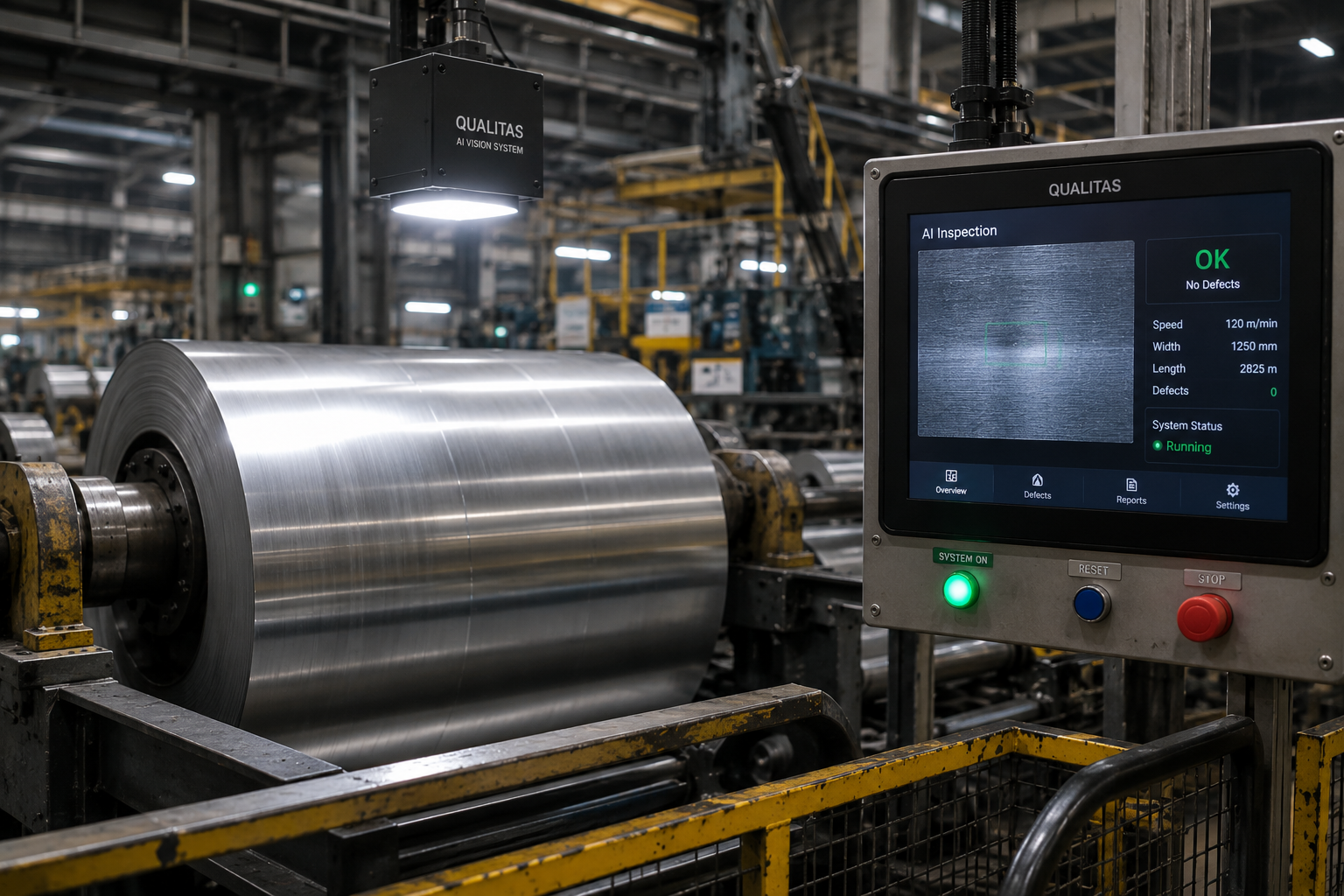
Micro-sized defects (micro-cracks, pin-hole defects, cracks in metals) and oversized/heavy objects requiring repositioning are also well-suited to automated inspection. For gauging and metrology, machine vision provides non-contact measurement down to micron-level precision.
Beyond the visible spectrum — hyperspectral, UV, and IR imaging — machine vision detects features completely invisible to the human eye.
Where Human Judgment Remains Indispensable
Humans excel in novel situations, applying intuition to complex or occluded views and making qualitative pass/fail judgments without specialized programming. Transfer of learning — applying prior knowledge to new defect types across different materials — is natural for humans but requires separate model training for machine vision.
Human-in-the-loop automation is valuable where miss-out probability is high: the machine makes confident decisions on clearly good parts, while borderline items route to human cross-inspection and model improvement.
Key takeaways
- Machine vision outperforms humans in speed, accuracy, and consistency on defined tasks
- OCV/OCR routinely achieves >99% accuracy — far beyond sustained human performance
- Human judgment excels in novel situations, transfer of learning, and managing model drift
- "Human in the loop" hybrid approaches maximize both accuracy and adaptability